

- Ping S259 Vs Vokey SM11 – Which £179 Wedge Wins?Posted 11 hours ago
- Best Zero Torque Putters 2026: Top 5 Ranked by PGA ProsPosted 1 day ago
- Best Golf Quarter Zip Sweaters 2026: Our Top 5 PicksPosted 1 day ago
- 5 Best 14-Way Golf Stand Bags, Ranked (2026)Posted 2 days ago
- 5 Best Golf Jackets Under £100: Ranked for AutumnPosted 2 days ago
- Best Men’s Golf Trousers 2026: Our Top 5 PicksPosted 3 days ago
- Garmin S72 Review: The Ultimate Golf Watch?Posted 3 days ago
- Srixon Soft Feel vs Callaway Super Soft – Which Ball Wins the Distance and Feel Battle?Posted 6 days ago
- Srixon ZXi RKT Driver: The Ultimate Guide to All 3 ModelsPosted 6 days ago
- Ping G440 Irons Review 2026: Is This Ping’s Best Game-Improvement Set Ever?Posted 6 days ago
5 Best Winter Golf Balls 2026 From Just £19.95
Top 5 Best Winter Golf Balls 2026
Srixon Soft FeelTop Pick · £21.95 →
Winter Golf Balls 2026: Full Comparison
All five feature low-compression cores designed to deform properly at reduced winter swing speeds. Tip: scroll the table sideways on mobile to see all columns.
Why Your Summer Ball Stops Working in Winter
Golf balls are made of rubber and ionomer, both of which stiffen as the temperature drops. A ball that felt lively in August at 20 degrees behaves like a firmer ball in January at 5 degrees, and a firmer ball needs more clubhead speed to compress properly. That is the awkward part, because winter is exactly when your swing speed falls: two extra layers, heavy ground underfoot, and nobody makes their best move off a soggy lie in a gale.
Cold air is also denser than warm air, which adds drag and shortens carry distance. That is why so many golfers arrive at the first green in December having hit a 5-iron into a hole they usually reach with an 8. Swapping to a low-compression model will not restore your summer yardages, but it does stop you fighting a ball that has effectively stiffened up on you.
The five balls below all sit in the soft, low-compression bracket. Our guides to the best all-weather golf gloves and the best golf gilets pair neatly with this one, and the full golf balls range has plenty more.
What to Look For in a Winter Golf Ball
Low compression core
The single most important factor. A softer core deforms fully at 80mph rather than needing 100mph, so you keep more of your ball speed when the air is cold and your swing has slowed.
Feel at impact
A firm ball on a frosty morning stings the hands, especially on a thin iron shot. Softer covers and cores take the edge off and help you commit to the strike.
Visibility
Grey skies and leaf litter make a white ball hard to follow. Yellow options and bold alignment markings save searching time in December.
Flight window
Higher launch helps you carry wet ground instead of relying on run out. On exposed courses, a flatter flight holds its line better into a stiff breeze.
Cost per dozen
Thicker rough, leaf cover and casual water mean most golfers lose more balls per round in January than in July, so value matters more than usual.
Cover durability
Winter mats, frozen ground and grit take a toll. A resilient ionomer cover survives several rounds where a thin urethane cover may scuff after one.
★★★★★
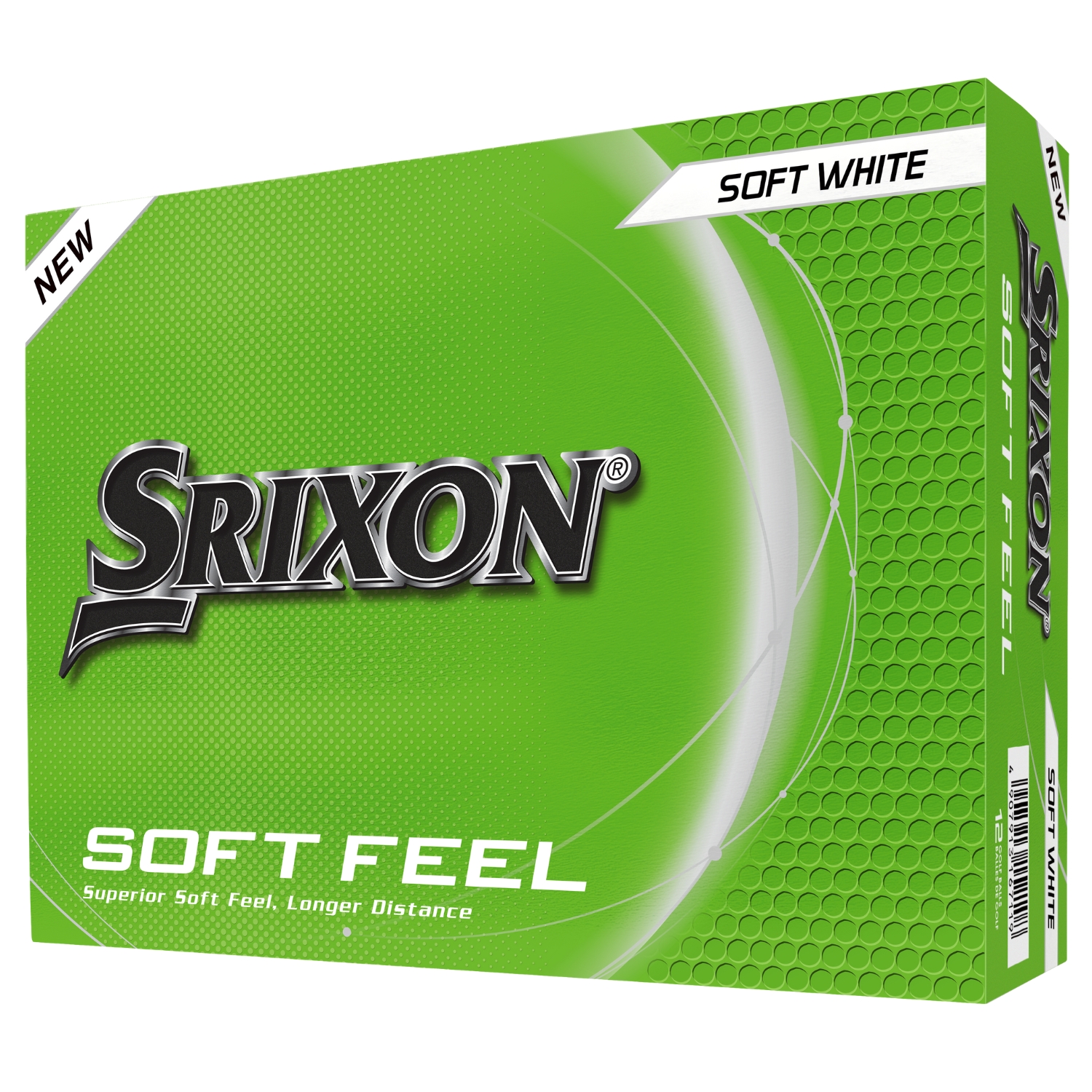
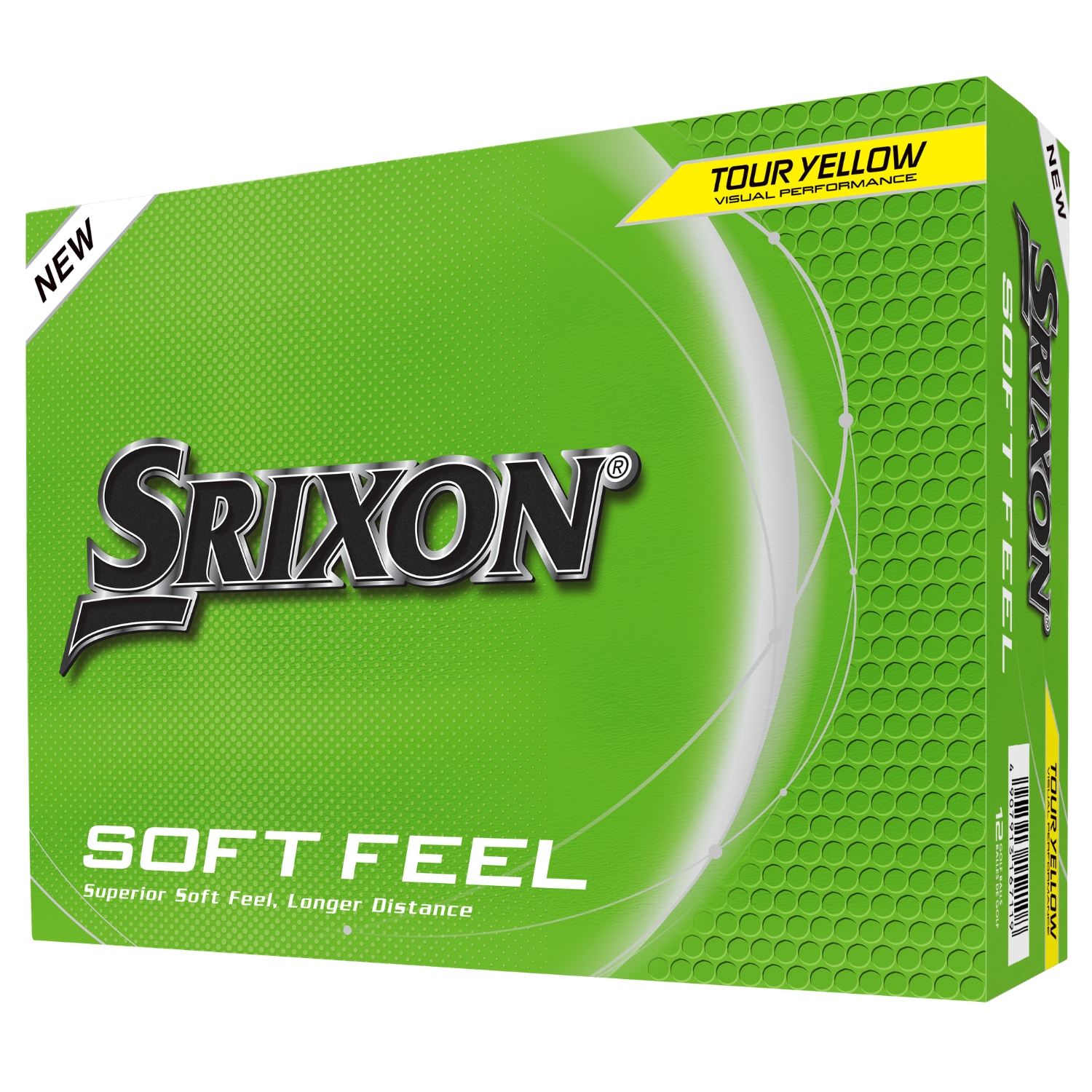
Srixon Soft Feel Golf Balls
One of the most popular balls in British golf, and in winter it makes even more sense than in summer. The Soft E.G.G. core sits inside a FastLayer construction that is soft at the centre and firmer towards the edge, so it compresses readily at reduced swing speeds without turning to mush.
FastLayer
338 Speed Dimples
Yellow option
What earns the Soft Feel top spot for cold weather is balance. Plenty of soft balls go so low in compression that they feel dead, while others chase distance and turn firm. The Soft Feel strikes a middle line: soft enough that a mid-iron off a wet, tight lie in February still feels cushioned, yet resilient enough that you are not left short on every green.
The 338 Speed Dimple pattern is the other winter advantage, producing a flight that stays reasonably stable when the wind gets up. Around the greens, the ionomer cover will not stop a pitch as sharply as a urethane tour ball, but winter greens are usually soft and receptive anyway. At £21.95 a dozen it is also easy to justify losing a few, and the Srixon Soft Feel in yellow is the same ball with a real visibility upgrade for the same money.
- Best balance of softness and speed in the group
- Genuinely stable flight in wind
- Excellent value at under £22 a dozen
- Available in high-visibility yellow
- Less greenside bite than a urethane ball
- Not the softest option here if feel is everything
- Low-spin players may want more stopping power
★★★★★
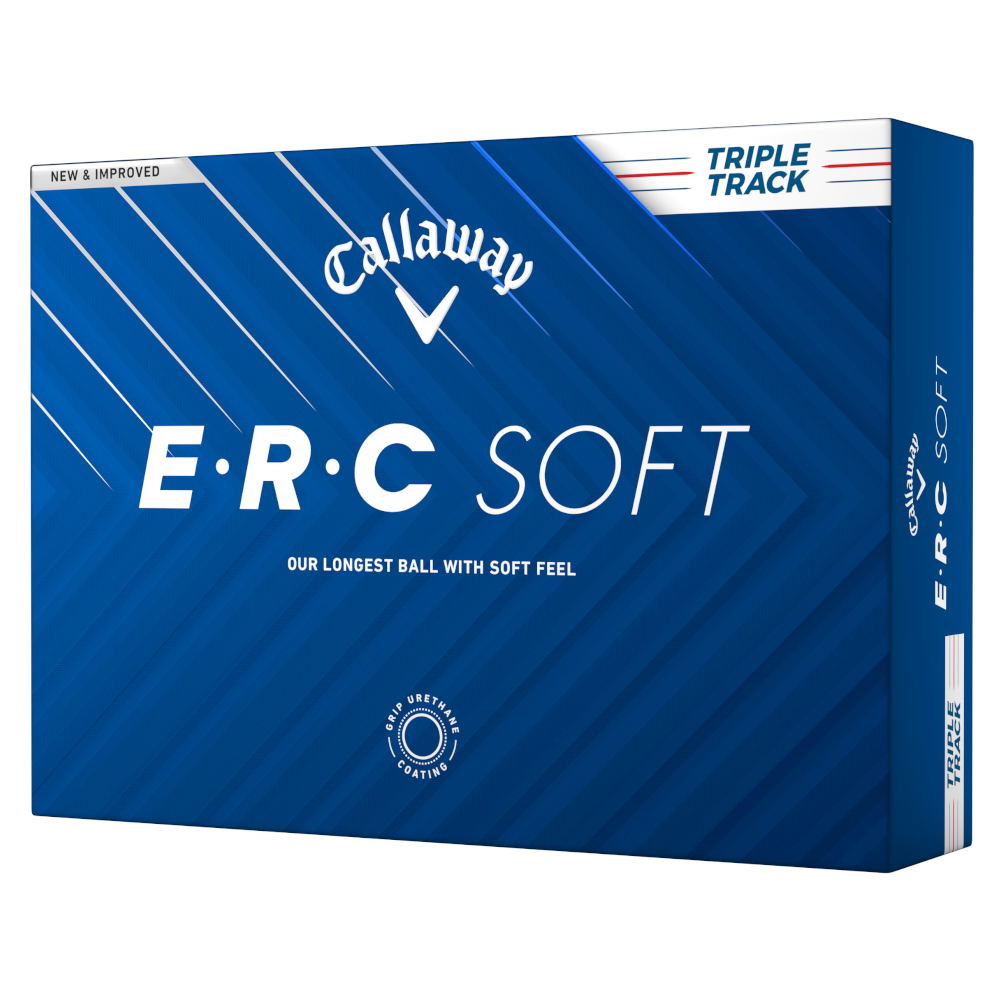
Callaway ERC Soft Triple Track Golf Balls
The ERC Soft is the closest thing here to a tour ball that has been rebuilt for slower swings. A large, soft core drives distance, while the hybrid cover adds a level of short-game control the other two-piece balls in this list cannot match.
Triple Track
High launch
3-piece
Winter greens present a strange problem. They are soft enough to hold shots, but slow and often bumpy, and most golfers end up chipping and pitching more than usual because approach shots come up short. That is where the ERC Soft earns its price: it gives you meaningful spin from 40 yards and in, so a pitch onto a heavy green behaves predictably rather than releasing away into the fringe. Triple Track alignment helps too, because on slow, wet greens you have to hit putts firmly and any small aim error is punished.
The trade-off is cost. At £39.99 a dozen, losing four balls in a round in mid-January genuinely stings, and the softer hybrid cover picks up scuffs faster than a firmer ionomer if your course uses winter mats. If you like the ball but want more visibility, the wider Callaway range includes yellow and Truvis versions of the same model.
- Best short-game control of the five
- High launch helps carry wet fairways
- Triple Track is a real help on slow winter greens
- Feels premium without a tour ball’s compression
- Twice the price of our top pick
- Softer cover scuffs more readily off mats
- High flight can balloon into a strong headwind
★★★★★
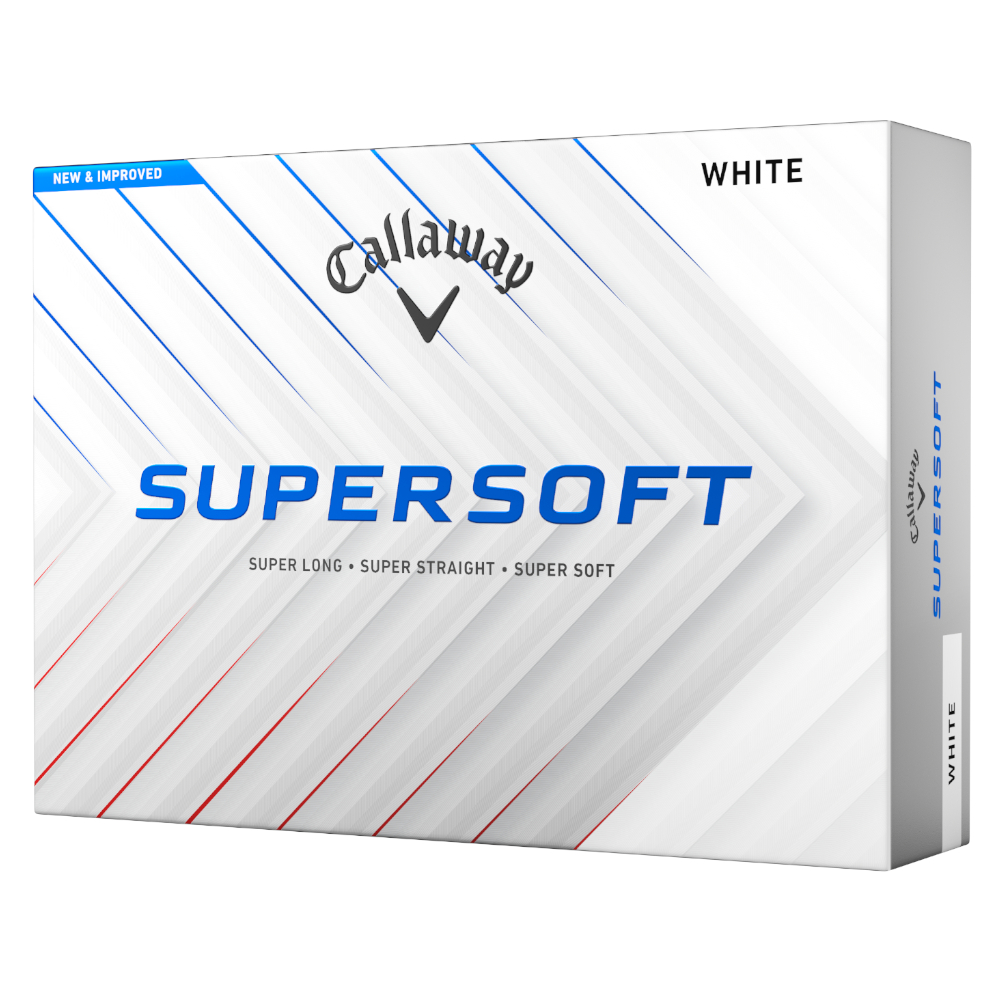
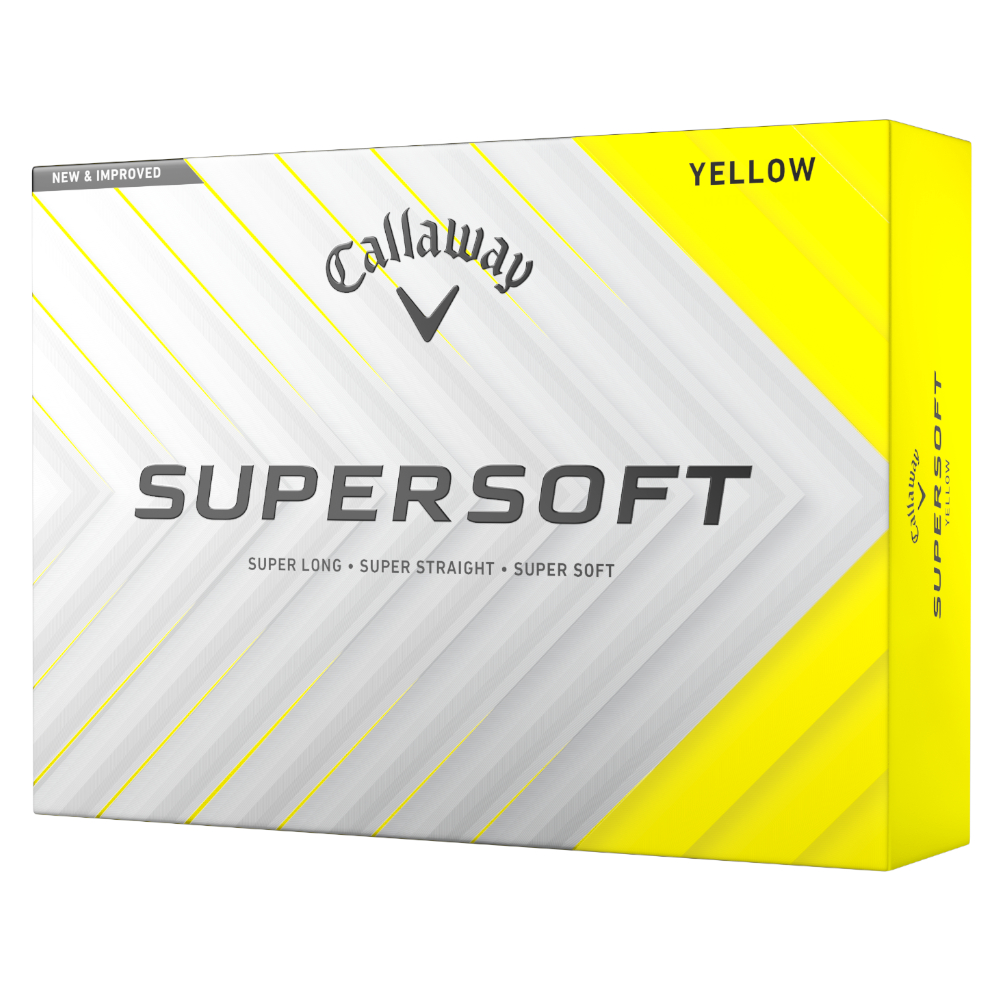
Callaway Supersoft Golf Balls
Supersoft has been a fixture in British golf bags for years, and the reason is straightforward: it is very easy to hit high and straight. The HyperElastic SoftFast core is designed to squash at modest swing speeds, which is precisely the winter problem it solves.
Very soft feel
High launch
Colour options
If your winter complaint is that everything comes out low and runs into trouble, Supersoft is the ball to try first. It launches noticeably higher than most balls at this price, and extra height matters in winter because the ground gives you almost nothing back once fairways are saturated. It is also very forgiving off the tee, since the low-compression, low-spin combination tends to straighten out mild side spin.
Do not expect much bite on a full wedge. This is a distance-and-feel ball rather than a spin ball, and it releases upon landing. On soft winter greens, that is rarely fatal, but if you play somewhere that drains well and stays firm, the ERC Soft above is the better fit.
- Highest, easiest launch in the group
- Exceptionally soft feel in cold conditions
- Very straight for slower or looser swings
- Yellow and splatter versions aid visibility
- Limited wedge spin, tends to release
- High flight is less stable in strong wind
- Faster swingers may find it too soft
★★★★★
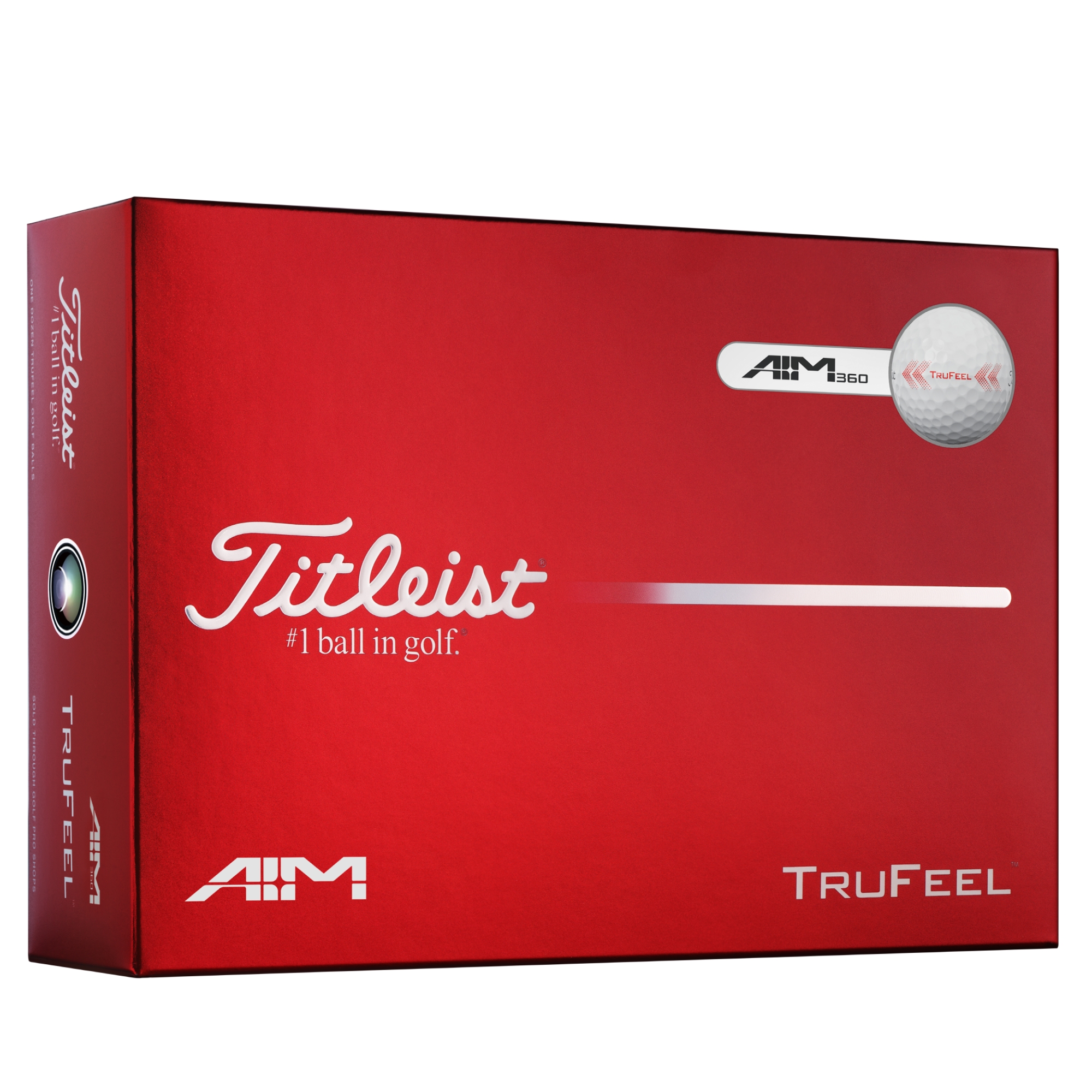
Titleist 2026 TruFeel Aim 360 Golf Balls
TruFeel is the softest ball Titleist makes, built around a TruTouch core with a thin, responsive cover. It delivers a muted, dense feel rather than a springy one, and the 2026 Aim 360 version adds a full-circumference alignment aid for tee shots and putts.
Aim 360
Penetrating flight
Titleist quality
British winter golf is often as much about wind as it is about cold, and that is where TruFeel separates itself from the higher-launching balls here. Its flight is flatter and more penetrating, so a 7-iron into a two-club breeze holds its line instead of climbing and stalling. The Aim 360 marking earns its place too: because the line runs right around the ball, you always have a usable alignment reference, which helps pace control on slow winter surfaces.
Short-game performance is respectable for a two-piece ball, sitting between Supersoft and the ERC Soft. If you already play Titleist, this is the natural cold-weather move down from a Pro V1. Our guide to the Pro V1 range compared is worth a read, and the full Titleist golf ball range covers everything in between.
- Most wind-resistant flight in the group
- Aim 360 alignment helps on slow greens
- Soft but controlled, never mushy
- Titleist consistency at a mid price
- Lower flight gives less carry over wet ground
- Not as soft as UltiSoft or Supersoft
- Costs more than our top pick
★★★★☆
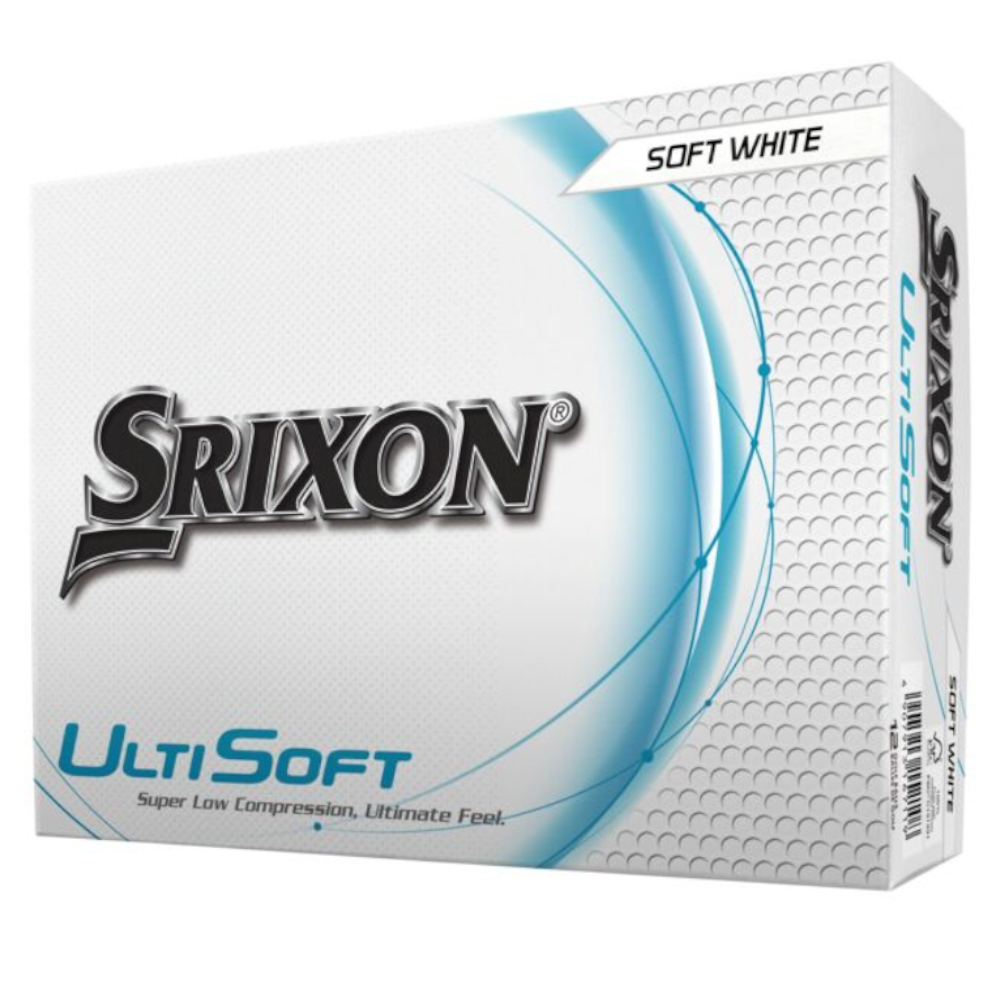
Srixon UltiSoft Golf Balls
UltiSoft is the lowest-compression ball Srixon offers and the softest in this guide. If cold weather has taken a real bite out of your swing speed, this is the ball that will still compress fully, and at £19.95 it is the cheapest dozen here.
FastLayer Core
338 Speed Dimples
Best value
This is the specialist pick. UltiSoft is aimed at golfers whose driver speed sits below roughly 85mph, and in winter plenty of golfers who are comfortably above that in summer temporarily join them. The FastLayer core gets firmer towards its edge, which helps the ball feel less lifeless despite the very low compression.
The feel is the softest of the five by a clear margin. Some golfers love it, others find it too muted and lose their sense of strike quality, and that split is the main reason it sits fifth rather than higher. Where it is hard to argue is value: at under £20 a dozen it is the ball to have when the course is wet, the rough is long and you know you will lose a couple.
- Lowest compression, easiest to compress when cold
- Cheapest dozen in this guide
- FastLayer core keeps some speed off the tee
- Very kind on the hands in frosty conditions
- Can feel too muted for some players
- Least greenside spin of the five
- Faster swingers will lose ball speed
Winter Golf Ball Technology Explained
Compression rating
A measure of how much the ball deforms under load. Lower numbers mean less force is needed to squash the ball, which is why they suit cold air and slower swings. Most winter-friendly balls sit well below 70.
Graduated cores
Srixon’s FastLayer and Callaway’s HyperElastic designs are soft at the centre and firmer at the edge. That gives soft feel without the deadness that a uniformly soft core produces.
Cover material
Ionomer covers are tougher and cheaper but spin less. Urethane and hybrid covers grip the grooves for more short-game spin, at the cost of durability and price.
Alignment aids
Triple Track and Aim 360 markings give you a reference line for aiming putts, which matters on slow, bumpy winter greens.
Ball storage
Balls left in a cold car boot start the round stiff. Keep the sleeve you are playing indoors and carry it in a pocket.
Winter Golf Balls – Performance Ratings
Which Winter Golf Ball Should You Buy?
Priority 1: Are you losing a lot of distance and feel?
- YES → Start with the Srixon Soft Feel at £21.95, the best all-round compromise, or drop to the UltiSoft if your swing speed is genuinely low
- NO → Skip to Priority 2
Priority 2: Is your course exposed and windy?
- YES → Choose the Titleist TruFeel Aim 360 for its flatter, more stable flight
- NO, it is sheltered and soft → The Callaway Supersoft will help you carry the wet ground
Priority 3: Do you still want to spin wedges?
- YES → The Callaway ERC Soft Triple Track is the only ball here with real greenside bite
- NO, and I lose plenty of balls → Buy the Srixon UltiSoft at £19.95 and stop worrying about it
Three Player Profiles
The winter league regular
Profile: Plays every Sunday whatever the weather, mid-teens handicap, driver speed around 90 mph, dropping closer to 85mph in January.
Recommendation: Srixon Soft Feel, ideally in yellow.
Why: It holds distance, feels good on cold strikes, and at under £22 a dozen you can lose one without a second thought.
The senior golfer
Profile: Plays two or three times a week off a modest swing speed, values feel and height more than raw distance.
Recommendation: Srixon UltiSoft, or Callaway Supersoft for extra height.
Why: Both compress fully at slower speeds. UltiSoft wins on price, Supersoft on carry over soggy fairways.
The low handicapper
Profile: Single figures, normally plays a urethane tour ball, will not give up short-game control just because it is December.
Recommendation: Callaway ERC Soft Triple Track, with the Titleist TruFeel for windy days.
Why: It keeps meaningful wedge spin while dropping compression, so scoring shots still behave as expected.
Need expert advice? If you are not sure whether to drop compression or stick with your usual ball this winter, our PGA professional team can talk it through with you and match a model to your swing speed and home course. Call us free on 0800 3681097 or email sales@thegolfshoponline.co.uk
Winter Golf Balls FAQs
Does a golf ball really travel less far in cold weather?
Yes, and by more than most golfers expect.
The ball becomes stiffer as it cools, so it converts less of your energy into ball speed, and cold air is denser, which adds drag. Combined with the swing speed you lose to layers and heavy ground, it is common to be a full club shorter in mid-winter.
Is a low-compression ball always better in winter?
For most club golfers, yes, but not for everyone.
If you swing the driver above roughly 105 mph, you will still compress a firmer ball perfectly well, and dropping too low can cost you speed and control. Below 90mph a softer core will help. The biggest gains go to golfers who were already borderline on compression in summer.
Should I keep my golf balls warm before playing?
It helps, within the rules.
A ball stored at room temperature will perform better on the first few holes than one that has spent the night in a freezing car boot. Keeping a sleeve in an inside pocket is fine. What you must not do is use a device to deliberately warm a ball during the round, which is not permitted under the Rules of Golf.
Are yellow golf balls actually easier to see in winter?
Against grey skies and wet ground, generally yes.
White balls disappear into overcast cloud and blend with frost, casual water and light-coloured leaf litter, while yellow gives better contrast in flat, low light. The exception is a course carpeted in autumn leaves, where the difference narrows.
Will I lose greenside spin by switching to a softer ball?
Some, but winter conditions soften the blow.
Ionomer covers spin less than urethane, so a full wedge will release further. However, winter greens are usually soft and receptive, so the ball stops largely on impact anyway. If you still want spin, the Callaway ERC Soft is the pick of this group thanks to its hybrid cover.
How many balls should I buy for the winter?
Two to three dozen will usually see you through.
Ball loss rises in winter thanks to longer rough, leaf cover and standing water. Buying a couple of dozen up front is better value than replacing sleeves as you go, and it keeps you on the same ball all season.
Why Purchase Your Winter Golf Balls from The Golf Shop Online?
Award-Winning Service Since 2002
Average Rating: 4.9 out of 5.0
29,000+ Total Reviews
8,000+ on Reviews.co.uk · 6,000+ on Trustpilot · 15,000+ on Google
Led by PGA professional Mark Crossfield, with over 330 million YouTube views
60-Day Returns
Unused, unopened dozens can be returned within 60 days for a full refund.
Authorised Retailer
An authorised stockist for Srixon, Callaway and Titleist, so every dozen is genuine.
Expert PGA Guidance
Four PGA professionals on hand to match a ball to your swing speed and home course.
Free UK Standard Delivery
Every order over £30 comes with free standard UK delivery.
Lowest Price Promise
Found the same ball cheaper elsewhere? Tell us and we will do our best to match it.
Real Golfers, Real Reviews
Our reviews come from golfers who play the same British winter conditions.
Winter Golf Balls – Final Verdict
The Srixon Soft Feel takes the win because it does not force you into a compromise. It is soft enough to compress properly when the temperature drops, stable enough in wind to trust on an exposed course, and cheap enough at £21.95 that a lost ball in the winter rough is not a disaster. For most club golfers it is the ball to buy in October and play until March.
Want more from your wedges? Spend the extra on the Callaway ERC Soft Triple Track. Windswept course? The Titleist TruFeel Aim 360 flies flatter. And if your swing speed has dropped a long way, the Srixon UltiSoft at £19.95 is the softest and cheapest way to keep the ball moving.
Get Your Winter Golf Balls Sorted
Free UK standard delivery on orders over £30 and a 60-day returns policy on every dozen.
Srixon Soft Feel £21.95 · Callaway Supersoft £24.95 · Srixon UltiSoft £19.95
Complete Your Setup: Winter Golf Essentials
- Golf waterproofs – the foundation of playable winter golf.
- Men’s golf sweaters – a mid layer that lets you turn beats a thick one that does not.
- Golf umbrellas – keeps grips and gloves dry between shots.
- FootJoy golf gloves – wet leather goes slippery, so an all-weather glove is the winter option.
- Golf bags – a hooded bag keeps spare balls and towels usable all round.
If you want to check that a model is approved for competition play, The R&A publishes the conforming golf ball list alongside the Rules of Golf.
Disclaimer: Prices, specifications, and availability are accurate as of publication but may change. All Srixon, Callaway, and Titleist products featured are genuine products from an authorised retailer. Product performance may vary based on individual use and care. 60-Day Returns Policy: If you are unhappy with any product, you may return it — unused, unopened, and in its original packaging — within 60 days for a full refund.
Free UK Standard Delivery: Every order over £30 from The Golf Shop Online includes free UK standard delivery. For the most current pricing, availability, and product specifications, please visit our website or contact our team on 0800 3681097. The Golf Shop Online has been serving golfers since 2002 with award-winning customer service backed by 29,000+ verified reviews across Reviews.co.uk, Trustpilot, and Google.

Related Posts




-
 Ping S259 Vs Vokey SM11 – Which £179 Wedge Wins?
Ping S259 vs Vokey SM11 Nickel: Which £179 Wedge...
- October 14, 2026
-
Best Zero Torque Putters 2026: Top 5 Ranked by PGA Pros
Best Zero Torque Putters 2026: Top 5 Ranked by...
- October 13, 2026
-
Best Golf Quarter Zip Sweaters 2026: Our Top 5 Picks
Top 5 Men’s Quarter-Zip Golf Pullovers for 2026 Quick...
- October 13, 2026



-
Understanding the Ping Colour Chart & Dot System
Ping Colour Chart – can you understand it?...
- September 20, 2026
-
Ping Grip Sizes – How to Choose The Correct Golf Grip
If you have read our blog on choosing the...
- September 16, 2026
-
Can I custom fit Ping Golf Clubs online?
A frequent question our golf professionals get while speaking...
- November 9, 2020


![X [Twitter]](https://www.thegolfshoponline.co.uk/assets/themes/gso2022/images/footer/icon-x.png)


