

- Best Golf Gloves for Women 2026: Grip, Feel & ValuePosted 2 mins ago
- Most Forgiving Fairway Woods 2026: Our Top 5 RankedPosted 32 mins ago
- Top 5 Rangefinders with Slope 2026: Tested & RankedPosted 24 hours ago
- Is the Ping BunkR the Best Ping Sand Wedge of 2026Posted 2 days ago
- The Best High Bounce Golf Wedges for Soft Turf 2026Posted 2 days ago
- Ping Prodi G Junior Clubs – Fitting Chart & Size GuidePosted 2 days ago
- SuperStroke 1.0 Putter Grips – Which One Should I Use?Posted 2 days ago
- Best 14 Way Divider Golf Bags 2026: Top 5 TestedPosted 3 days ago
- Is the 2026 Titleist Pro V1x Left Dash Worth It? The Numbers Don’t LiePosted 3 days ago
- Best Electric Golf Trolley 2026 – Buyers GuidePosted 3 days ago
Most Forgiving Fairway Woods 2026: Our Top 5 Ranked
Most Forgiving Fairway Woods 2026: Our Top 5 Tested
Ping G440 MAX FairwayTop Pick · £319 →
All five forgiving fairway woods feature low, deep centres of gravity and shallow faces built for turf contact. Tip: scroll the table sideways on mobile to see all columns.
Why forgiveness matters more in a fairway wood than anywhere else
The 3-wood is the hardest club in most bags to hit well, and the reason is simple geometry. You swing a long shaft at a ball sitting on the ground, behind a face barely taller than the ball itself. Miss the middle by a few millimetres and the shot leaks sideways. Genuinely forgiving fairway woods fix that by moving mass low and towards the perimeter, so the head resists twisting and the ball still climbs.
Manufacturers have made this the priority for 2026. Head sizes have grown, crowns have gone composite to free up weight, and soles have been reshaped so the leading edge does not dig. The result is a generation of forgiving fairway woods that a 20-handicapper can hit off a tight lie, which was rarely true a decade ago. If your long game leans on a rescue club, the new shapes are worth a look.
We have picked five forgiving fairway woods from our own range, all moving steadily this season. Between them, they cover £74.95 to £369 and five different brands. If you want the wider picture first, our best fairway woods guide covers the full 2026 field, and our most forgiving golf drivers roundup applies the same thinking off the tee.
What to look for in a forgiving fairway wood
Head size and MOI
A bigger footprint moves weight farther from the centre, which resists twisting on a heel or toe strike. Anything from 170cc upwards in a 3-wood is generous by modern standards.
Face height
A shallower face sits lower behind the ball and makes contact from the turf far easier. Deep faces suit tee shots and stronger swings, but they punish a thin strike.
Centre of gravity
Low and deep is the combination that launches the ball high without adding spin. Carbon crowns and tungsten sole weights are the two most common ways brands achieve it.
Sole design
Look for a rounded or stepped sole with some camber. It lets the club glide rather than dig when your low point drifts behind the ball, which is the classic mishit.
Loft options
Most golfers are better served by a 5-wood or 7-wood than a 15-degree 3-wood. Extra loft adds launch and cuts sidespin, which is forgiveness by another name.
Shaft weight
A lighter, higher-launching shaft helps moderate swing speeds get the ball airborne. Our custom fitting team can match the weight and flex to your tempo free of charge.
Quick Navigation
| Best overall | Best for high launch |
| Best value | Best feel |
| Best budget | Performance ratings |
| Which one should you buy? | FAQs |
★★★★★
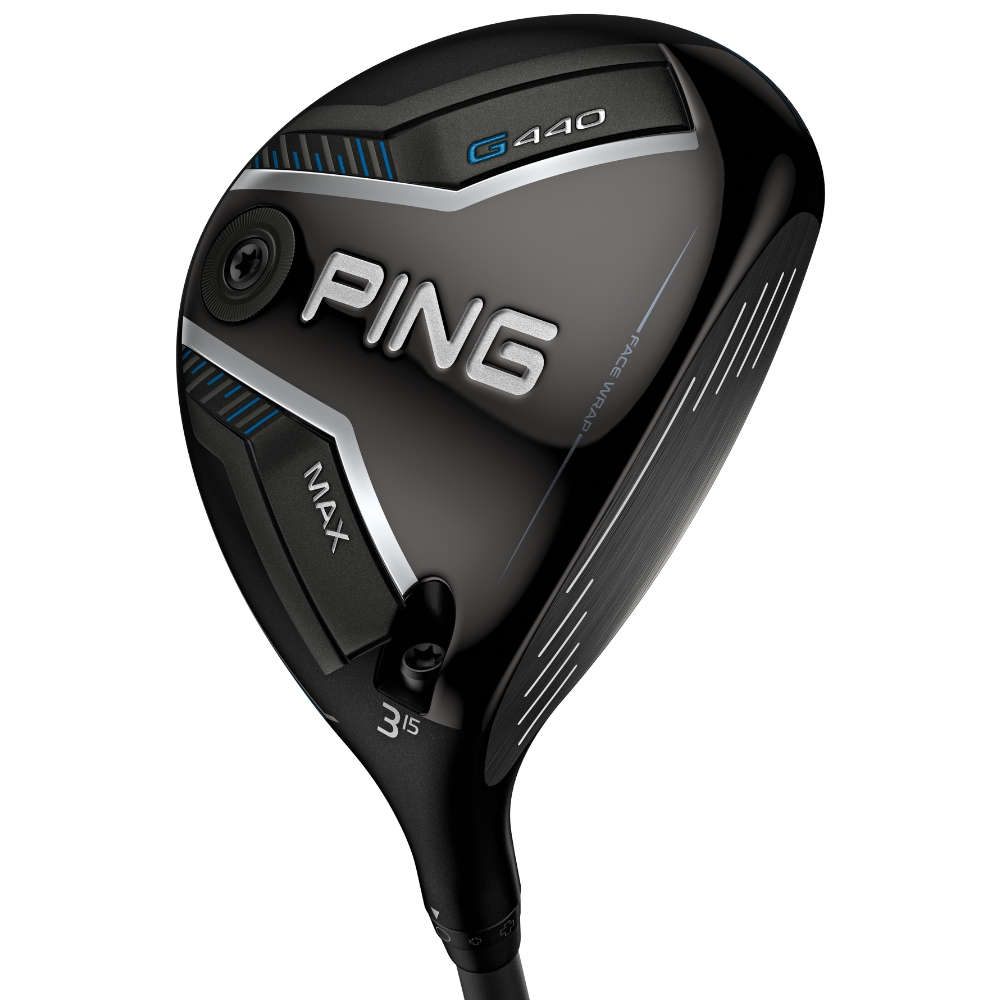
Best overall: Ping G440 MAX Fairway
Ping builds the most consistently forgiving fairway woods in the game, and the G440 MAX is the clearest example. A taller face gives you confidence from the tee without raising the centre of gravity, and heel and toe face thinning keeps ball speed alive across the whole hitting area.
Free Hosel
Neutral flight
Five lofts
The engineering story here is weight redistribution. Removing hosel material and wrapping carbon over the crown frees grams that Ping has pushed low and deep, which is exactly where you want mass in forgiving fairway woods. Launch climbs, spin stays sensible, and the neutral face angle means the club does not fight a player who already draws the ball.
What stands out on the course is how ordinary a slightly heavy strike feels. A shot caught a groove low still carries a sensible number rather than collapsing. The adjustable hosel across all five lofts lets our fitters tune launch without changing shafts. Among forgiving fairway woods, this is the most complete package, and the 17-degree 4-wood is the sleeper option for anyone who finds a 3-wood too demanding.
- Widest loft range of any model on this list
- Adjustable hosel on every head
- Ball speed holds up well on heel and toe strikes
- Neutral flight suits both draw and fade players
- Adjustment tool is not included
- Taller face is less helpful from heavy rough
- Not the cheapest way to add forgiveness
★★★★☆
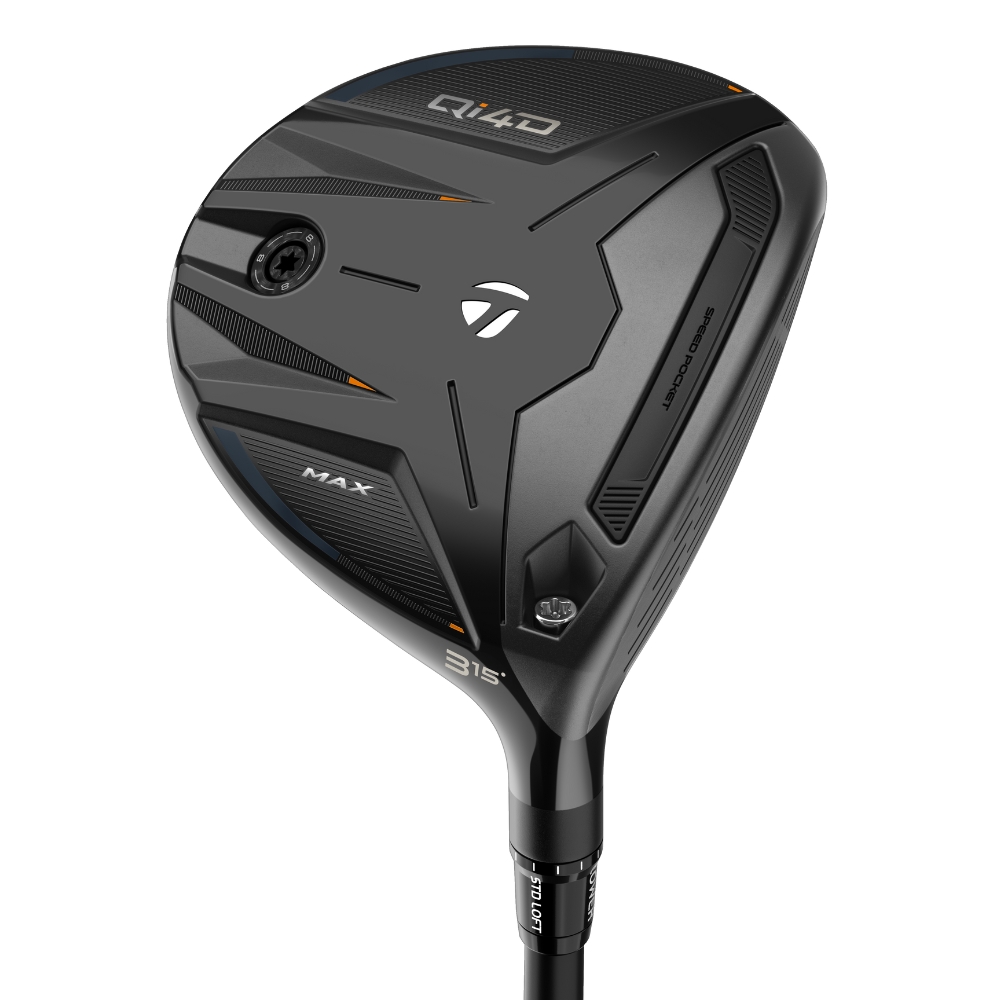
Best for high launch: TaylorMade Qi4D Max Fairway
TaylorMade describes this head as a mini-mini driver and the numbers back it up. At 200cc, the 3-wood is 17 per cent larger than the Tour model, with the extra material pushed to the perimeter and an 8g weight sitting right at the back.
Shallow face
Draw bias
Headcover included
Size is doing the heavy lifting. Stretching the head out raises the moment of inertia, so a toe strike holds more speed and stays closer to the target line. The shallow face and rear weighting then produce the high, soft-landing flight that most amateurs need from a long club into a green.
The slight draw bias is worth flagging. If you fight a slice, it helps, and this is one of the few forgiving fairway woods that straightens a weak left-to-right flight without a custom setting. If you already turn the ball over, look at the standard Qi4D or the Ping. Lofts run 15 to 24 degrees, with fixed hosels on the 7-wood and 9-wood.
- Largest head here, so the highest stability
- Easiest club on the list to launch from the deck
- Draw bias helps golfers who slice
- Headcover supplied as standard
- Draw bias is unhelpful if you already hook
- 7-wood and 9-wood are not adjustable
- Large footprint will not suit traditionalists

★★★★☆
Best value: Callaway Elyte Fairway Wood
Callaway’s Ai 10x face uses ten times the control points of the original Smart Face, and the practical effect is tighter dispersion rather than headline ball speed. Pair that with a shallow profile and a tungsten speed wave in the 3-wood through 7-wood, and you get a very easy club to get airborne.
Tungsten speed wave
Stepped sole
3HL option
At £249, the Elyte undercuts the Ping and TaylorMade by £70 while giving up very little. The updated step sole matters most off a tight British lie, because it reduces the metal dragging through turf and keeps energy going into the ball. This is the cheapest of the premium forgiving fairway woods here, and it does not feel like a compromise.
The 3HL at 16.5 degrees deserves attention. It is a half-loft step up from a standard 3-wood and, for anyone who struggles to launch a 15-degree head, often the easiest upgrade in the bag. Note that only the 3-wood and 3HL have adjustable hosels, and heads shrink through the set from 169cc to 144cc.
- Strongest price-to-performance ratio on this list
- Stepped sole copes well with tight lies
- 3HL loft is a genuine problem solver
- Free headcover included
- Only the 3-wood and 3HL are adjustable
- Smaller heads in the higher lofts
- Adjustment tool sold separately
★★★★☆
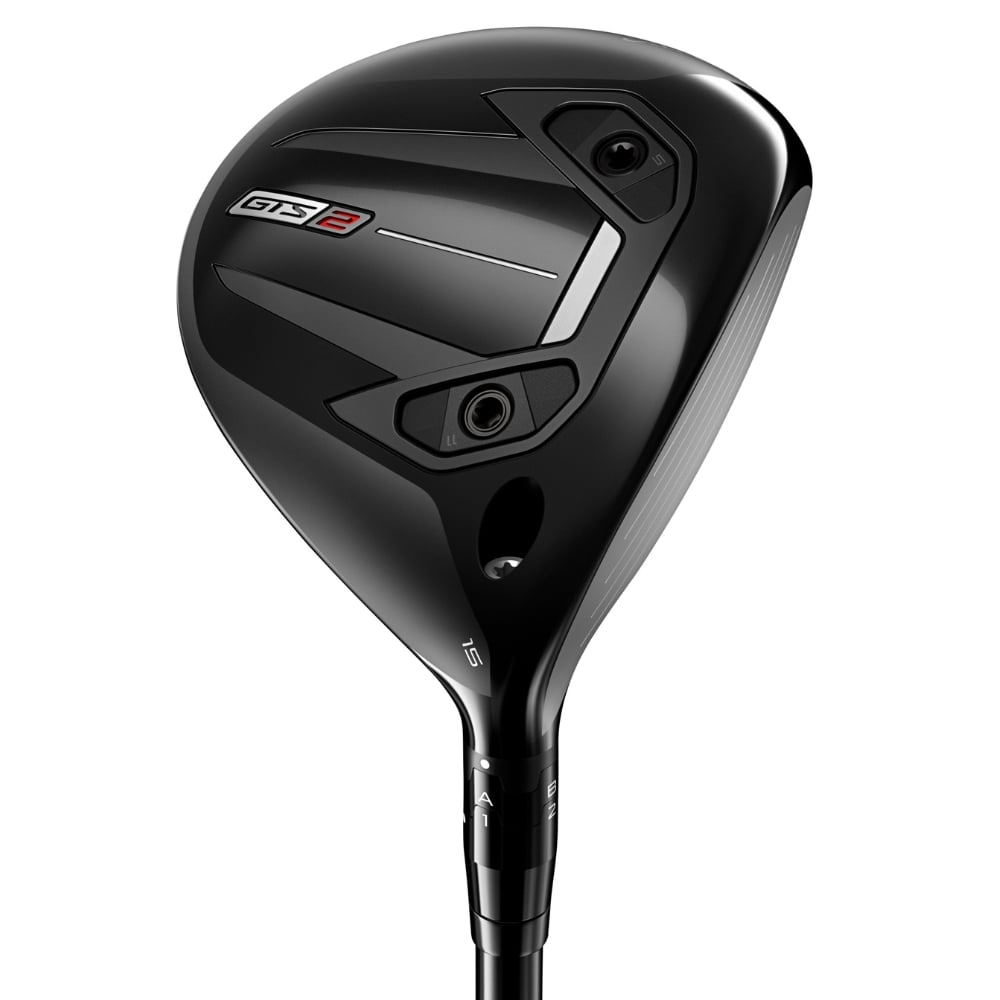
Best feel: Titleist GTS2 Fairway Wood
Titleist has wrapped composite material around the crown to free weight for a lower, deeper centre of gravity while keeping the sound and feel the brand is known for. A larger profile and shallower face make low strikes behave much more like centre strikes.
L-Cup face
Dual weighting
Low spin
The GTS2 is built for all-round playability rather than workability, and Titleist is open about it. The re-engineered L-Cup face preserves ball speed low on the face, which is where most forgiving fairway wood mishits happen. Heel and toe weights let a fitter bias the head slightly without changing its character.
Feel is why you spend the extra money. This is the quietest, most solid-sounding club in the group, which matters to better players stepping into forgiving fairway woods. It suits a shallower, sweeping delivery. Attack the ball steeply with a lot of shaft lean, and the GTS3 is the better fit.
- Cleanest sound and feel in the group
- Low-face strikes hold their speed well
- Interchangeable weights for flight tuning
- 3+ at 13.5 degrees for strong swings
- Most expensive club on this list
- Suits sweepers more than steep attackers
- No 9-wood in the GTS2 lineup
★★★★☆
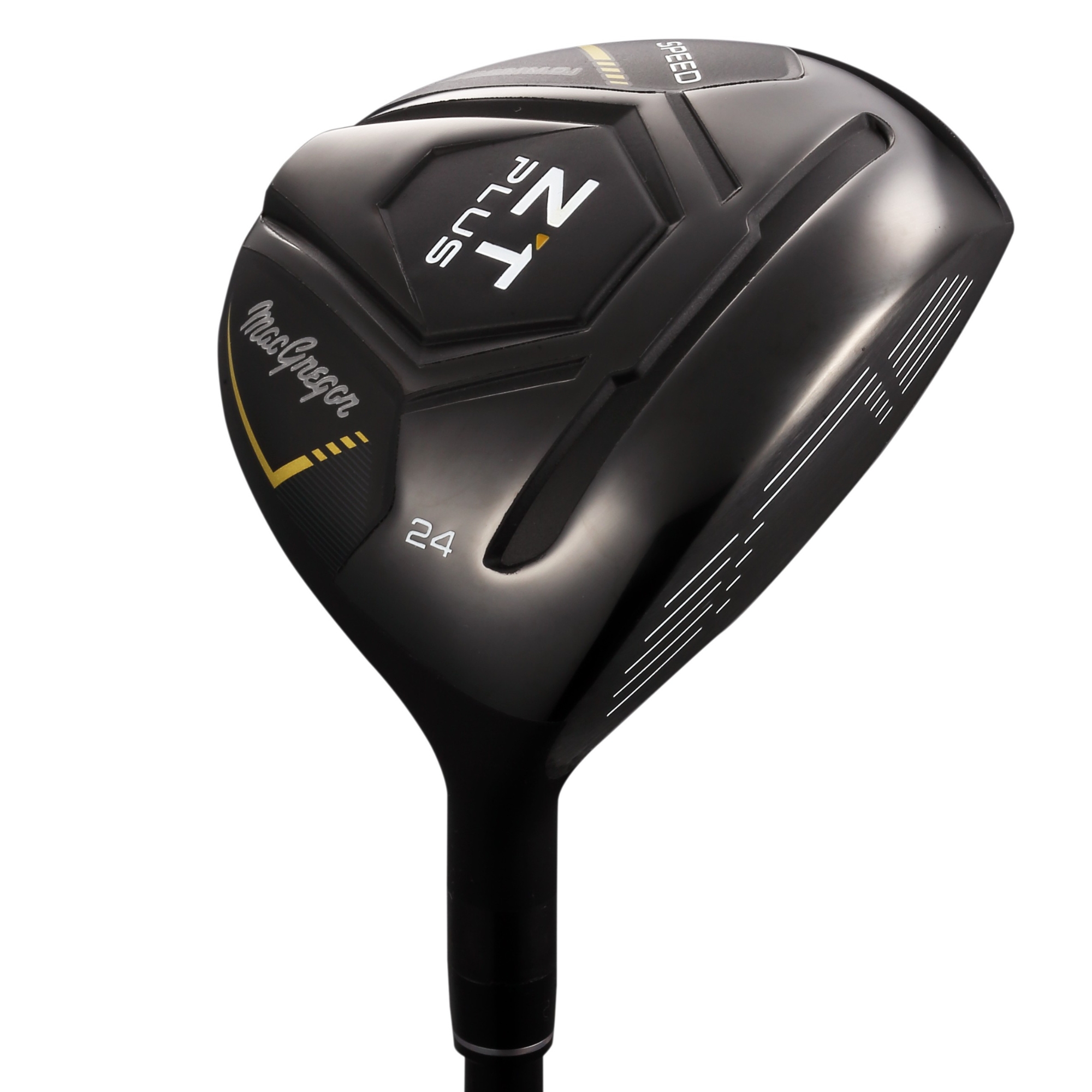
Best budget: MacGregor ZT Plus Fairway
A high-MOI head with peripheral weighting and a low centre of gravity, for less than a quarter of the price of premium options. The low profile shape sits neatly behind the ball, and the ultra-slim face keeps ball speed respectable for the money.
Low profile
Four lofts
Graphite shaft
Nobody should pretend this matches a £369 Titleist for ball speed or acoustics. It does offer the two things that create forgiveness, a high MOI head and a low centre of gravity, at the entry point for forgiving fairway woods. That makes sense for a newer golfer or a second set kept in the boot.
The lightweight regular-flex graphite shaft is the right call here, since heavier steel would only make the club harder to launch. We would steer most buyers toward the 18- or 21-degree heads rather than the 15, because extra loft is the cheapest forgiveness available anywhere. It pairs well with a set of protective golf headcovers.
- Outstanding price for a high MOI head
- Four lofts, including a 24-degree option
- Light graphite shaft aids launch
- Backed by a full one-year warranty
- No adjustable hosel
- Ball speed trails the premium heads
- Single stock shaft option
Forgiving fairway wood technology explained
Moment of inertia
MOI measures how strongly a head resists twisting on an off-centre strike. Higher MOI keeps the face squarer through impact, so the ball starts closer to your intended line.
Composite crowns
Carbon weighs far less than titanium or steel. Replacing crown metal frees several grams that designers relocate to the sole, lowering the centre of gravity for an easier launch.
Variable face thickness
Thinning the face towards the heel and toe lets those areas flex more at impact. That preserves ball speed on the strikes that would otherwise cost you twenty yards.
Adjustable hosels
Turning the sleeve changes loft and lie by a degree or two. It is a fitting tool rather than a fix, but it lets one head suit several swing types.
Sole camber
Curvature from front to back and heel to toe lets the sole skid instead of digging. It is why a modern head escapes a semi-rough lie that would have stopped an older one dead.
Draw bias weighting
Shifting mass towards the heel encourages the toe to rotate through impact, closing the face slightly. It can be worth ten to fifteen yards of curve for a slicer.
Performance ratings
Which one should you buy?
Priority 1: do you struggle to get the ball airborne off the deck?
- YES → TaylorMade Qi4D Max, and take the 5-wood over the 3-wood
- NO → Skip to Priority 2
Priority 2: Is your miss scattered across the face rather than one-directional?
- YES → Ping G440 MAX, the most stable all-round head here
- NO, I slice it → TaylorMade Qi4D Max for the draw bias
- NO, I just want feel → Titleist GTS2
Priority 3: what is your budget?
- Under £100 → MacGregor ZT Plus
- Around £250 → Callaway Elyte
- £300 or more → Ping G440 MAX or Titleist GTS2
The improving beginner
Profile: 24 handicap and above, swing speed under 85mph, often plays winter golf on soft turf.
Recommendation: MacGregor ZT Plus in 21 degrees.
Why: Loft is the cheapest forgiveness you can buy, and at £74.95 there is no risk in finding out whether you use the club at all.
The weekend club golfer
Profile: 12 to 22 handicap, plays most weekends, wants one club that works off the tee and the deck.
Recommendation: Ping G440 MAX, or the Callaway Elyte to save £70.
Why: Both hold ball speed across the face, and neither forgiving fairway wood creates a new miss to manage.
The low handicapper
Profile: 0 to 11 handicap, sweeping delivery, wants stability without losing shot control.
Recommendation: Titleist GTS2, fitted with the heel and toe weights.
Why: It is the only club here that adds real stability while keeping the sound and feedback a good player expects.
Need expert advice? Choosing between lofts and shafts is where most of the gain sits with forgiving fairway woods, and it takes two minutes on the phone to get it right. Our PGA professional team is happy to help. Call us free on 0800 3681097 or email sales@thegolfshoponline.co.uk
Frequently asked questions
Are forgiving fairway woods easier to hit than hybrids?
It depends on your lie and your attack angle.
A modern high MOI wood is easier from a good fairway lie because the wider sole resists digging and the longer shaft adds speed. A hybrid wins from rough and on steeper swings. Many golfers carry both, using the wood for distance and the hybrid for recovery. Our hybrid guide for high handicappers covers the crossover.
Should I buy a 3-wood or a 5-wood?
Most club golfers score better with a 5-wood.
The extra three degrees of loft launches the ball higher, reduces sidespin and gives a steeper landing angle that holds greens. Unless you regularly need a 240-yard tee shot from the fairway, the 5-wood is the more useful club. Our 7-wood guide makes the case for going higher still.
Does an adjustable hosel actually make a difference?
Yes, but as a fitting tool rather than a cure.
Adding a degree of loft raises launch and tightens dispersion; a flatter lie reduces a left miss. The changes are real but small. Use adjustability to fine-tune a head that already suits you.
Will a lighter shaft help my long game?
For most amateurs, yes.
Dropping ten to fifteen grams of shaft weight usually adds a little clubhead speed and makes the club easier to deliver squarely. The trade-off is slightly less control at the top of your speed range. Our team can talk you through the stock options on each model.
Can I return a fairway wood if it does not suit me?
Yes, within 60 days under our returns policy.
If the club is unused, unopened and in its original packaging, you can send it back within 60 days for a full refund. Orders over £30 also ship with free UK standard delivery, so trying a club costs nothing extra beyond your time.
How many woods should I carry?
Two is the sweet spot for most players: a driver plus one fairway wood, with a hybrid covering the next gap. Carrying three woods only makes sense if you have clear yardage gaps of around fifteen yards between them. Map your carry distances first, then fill the holes.
Why Purchase Your Forgiving Fairway Woods from The Golf Shop Online?
Award-Winning Service Since 2002
Average Rating: 4.9 out of 5.0
29,000+ Total Reviews
8,000+ on Reviews.co.uk · 6,000+ on Trustpilot · 15,000+ on Google
Led by PGA professional Mark Crossfield, with over 330 million YouTube views
60-Day Returns
Unused and unopened clubs can come back within 60 days for a full refund.
Authorised Retailer
We are an authorised stockist for Ping, TaylorMade, Callaway, Titleist and MacGregor.
Expert PGA Guidance
Four PGA professionals are on hand to help you pick the right loft and shaft.
Free UK Standard Delivery
Every order over £30 ships with free standard UK delivery.
Lowest Price Promise
Find it cheaper elsewhere and we will do our best to match the price.
Real Golfers, Real Reviews
Verified customers leave every review across three independent platforms.
Our verdict – Most Forgiving Fairway Woods
The Ping G440 MAX is our pick of the forgiving fairway woods for 2026. It gives you the widest loft choice, an adjustable hosel on every head and the most consistent ball speed across the face, which is the combination that turns a difficult club into a reliable one. At £319, it is not cheap, but it is the least likely to end up unused in the garage.
If money is tighter, the Callaway Elyte at £249 gets you most of the way for £70 less, and the MacGregor ZT Plus at £74.95 proves that forgiving fairway woods need not cost a fortune. Slicers should look hard at the TaylorMade Qi4D Max, and better players wanting stability without losing feedback will prefer the Titleist GTS2.
Ready to put forgiving fairway woods in your bag?
Free UK standard delivery on orders over £30, plus our 60-Day Returns Policy on every club.
Ping G440 MAX £319 · Callaway Elyte £249 · MacGregor ZT Plus £74.95
Complete Your Setup: Long Game Essentials
- Golf drivers – match the head shape and shaft profile at the top of your bag.
- Golf irons – check your longest iron carry before choosing a fairway loft.
- Ping golf clubs – the full G440 family, from driver through to wedges.
- TaylorMade golf clubs – the complete Qi4D range including drivers and hybrids.
- Fairway woods for beginners – a simpler starting point if you are new to the game.
- Golf bags – full-length dividers stop long clubs rattling and scuffing.
Equipment rules governing loft, lie, and clubhead design are maintained jointly by golf’s two governing bodies. You can read the current specifications on the The R&A website.
Disclaimer: Prices, specifications, and availability are accurate as of publication but may change.
All Ping, TaylorMade, Callaway, Titleist and MacGregor products featured are genuine products from an authorised retailer. Product performance may vary based on individual use and care. 60-Day Returns Policy: If you are unhappy with any product, you may return it — unused, unopened, and in its original packaging — within 60 days for a full refund. Free UK Standard Delivery: Every order over £30 from The Golf Shop Online comes with free standard UK delivery. For the latest pricing, availability, and product specifications, visit our website or contact our team on 0800 3681097. The Golf Shop Online has served golfers since 2002, with award-winning customer service backed by 29,000+ verified reviews across Reviews.co.uk, Trustpilot, and Google.

Related Posts




-
 Best Golf Gloves for Women 2026: Grip, Feel & Value
Best Golf Gloves for Women 2026: Top 5 Tested...
- September 23, 2026
-
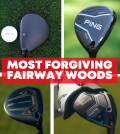
Most Forgiving Fairway Woods 2026: Our Top 5 Ranked
Most Forgiving Fairway Woods 2026: Our Top 5 Tested...
- September 23, 2026
-
Top 5 Rangefinders with Slope 2026: Tested & Ranked
Best Rangefinders with Slope 2026: Our Top 5 Tested...
- September 22, 2026


-
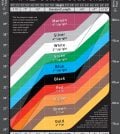
Understanding the Ping Colour Chart & Dot System
Ping Colour Chart – can you understand it?...
- September 20, 2026
-
Ping Grip Sizes – How to Choose The Correct Golf Grip
If you have read our blog on choosing the...
- September 16, 2026
-
Can I custom fit Ping Golf Clubs online?
A frequent question our golf professionals get while speaking...
- November 9, 2020

![X [Twitter]](https://www.thegolfshoponline.co.uk/assets/themes/gso2022/images/footer/icon-x.png)


